


What Exactly Is A Circadian Rhythm?

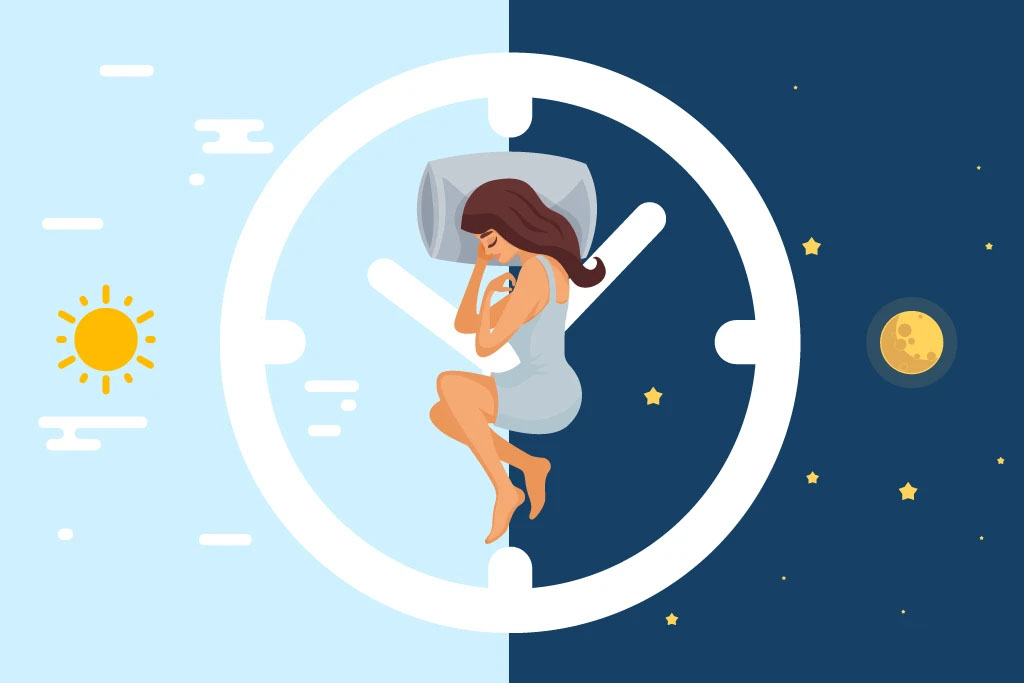
The Circadian Rhythm is the body’s innate timing device. It provides the timing for our sleep-wake cycles, hormone releases, our eating habits, and more.
It’s not just humans that have a Circadian Rhythm. In fact, all living organisms have one – animals, plants, fungi, and cyanobacteria. Circadian Rhythms are controlled internally, but are highly impacted by environmental cues.
How does it work?
The Circadian Rhythm’s functions are controlled within the hypothalamus, a portion of the brain. Within this part of the brain lies the suprachiasmatic nucleus (SCN). This is the component in our brains that functions like a clock, operating on a 24-hour rhythm. The SCN controls the production of melatonin, the hormone responsible for making you feel tired or sleepy. Within the SCN are a group of neurons that have the neuropeptide called Neuromedin S (NMS), which are critical for the timing of the Circadian Rhythm.
It’s important to remember that our internal sense of time is genetically determined. Regardless of how much light we get during the day, or what temperature it may be, we will still follow an innate 24-hour schedule (although some individual rhythms can be a bit different!). However, it is still highly impacted by outside cues such as light and temperature.
When the SCN receives information about incoming light from the optic nerves that relay information from the eyes to the brain, it signals the brain to promote alertness. When our intake of light decreases in the evening, the SCN sends those signals to initiate body relaxation.
For most adults, energy naturally wanes during the middle of the night (between 2:00am and 4:00am), and early afternoon (between 1:00pm and 3:00pm).